Outlier Performances Reshaping League Hierarchies Over Extended Cycles
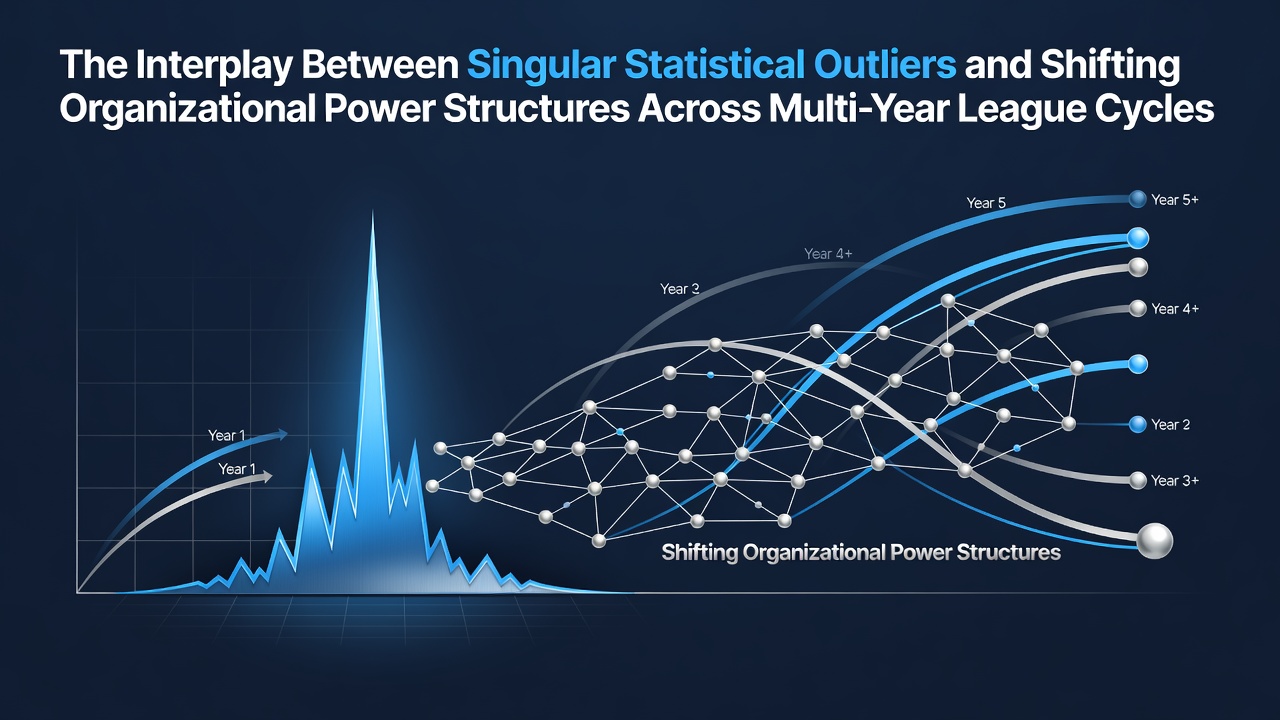
Statistical outliers in professional sports often emerge as single data points that deviate sharply from established norms, and these anomalies have repeatedly altered organizational power dynamics within leagues spanning several years. Data from various athletic governing bodies shows how one exceptional performance metric can trigger cascading effects on team strategies, roster decisions, and competitive balances. Observers note that such outliers do not occur in isolation but interact with existing structures to produce measurable shifts in standings and resource allocation over time.
Identifying Key Outlier Metrics Across Sports
League records indicate that outliers typically manifest in areas like scoring efficiency, defensive metrics, or endurance benchmarks, where an individual athlete's numbers exceed historical averages by significant margins. For instance, researchers tracking basketball and hockey data have found cases where a single player's season-long production led to revised team hierarchies that persisted beyond the initial cycle. These patterns emerge because organizations respond by reallocating budgets and coaching resources toward replicating or countering the outlier effect, which in turn influences draft selections and training protocols in subsequent years.
What's interesting is how these deviations compound when tracked across multi-year periods, according to analyses from academic institutions focused on sports performance. A study from the University of Queensland's Centre for Sport and Exercise Sciences examined how outlier events in rugby and soccer correlated with changes in club ownership priorities and sponsorship inflows. The findings revealed that teams experiencing such spikes often saw accelerated rises in their internal power structures, while competitors adjusted by investing in data analytics departments to detect similar patterns early.
Mechanisms of Organizational Power Shifts
Power structures within leagues evolve through decisions made in response to outlier data, and this process unfolds gradually over cycles rather than through abrupt changes. Teams that capitalize on an outlier frequently consolidate influence by securing better draft positions or attracting talent, which alters the balance of competitive strength across the league. Evidence from industry reports suggests that this redistribution affects not only on-field results but also off-field elements such as executive authority and media partnerships.
Yet the interplay becomes more complex when multiple outliers appear in quick succession, as seen in certain European and North American leagues during recent seasons. Data indicates that organizations adapt by forming specialized analytics units, which then gain prominence within the hierarchy and redirect decision-making authority away from traditional scouting networks. This transition has been documented in reports covering events up to June 2026, where several clubs reported structural reorganizations tied directly to performance anomalies identified in prior years.

Case Examples from Global Leagues
Take one documented instance in Australian rules football where a fringe player's unexpected statistical surge prompted league-wide reviews of talent development pathways, leading to updated policies by the Australian Sports Commission. Similar dynamics appeared in Canadian hockey circuits, where outlier goaltending metrics influenced front-office appointments and long-term strategic planning. These examples demonstrate how a solitary data point can prompt organizations to reassess their operational frameworks, resulting in sustained alterations to power distributions that extend across multiple seasons.
Researchers at institutions like the Swedish School of Sport and Health Sciences have tracked parallel trends in soccer, noting that outlier-driven shifts often coincide with changes in regulatory frameworks governing player contracts and salary caps. Such adjustments create feedback loops where initial anomalies encourage broader adoption of quantitative methods, further embedding data specialists into leadership roles over time.
Long-Term Implications for League Cycles
Over extended periods, the accumulation of outlier influences tends to standardize certain metrics as new baselines, which then shapes expectations for future cycles. Figures from sports research networks reveal that leagues experiencing frequent outliers develop more robust monitoring systems, reducing the disruptive potential of subsequent anomalies while simultaneously elevating the status of analytical personnel within organizations. This evolution affects everything from youth academy investments to international transfer strategies.
But here's the thing: these shifts rarely remain confined to individual teams, as competitive pressures force widespread adaptations across the league structure. Reports compiled by bodies such as Sport Canada highlight how outlier events have historically prompted collaborative initiatives among clubs to share analytical tools, thereby redistributing knowledge and influence at a systemic level.
Conclusion
The relationship between singular statistical outliers and organizational power structures continues to define multi-year league cycles through documented patterns of adaptation and response. Data from diverse sources, including university studies and national sports agencies, confirms that these interactions produce lasting changes in how teams allocate resources and prioritize expertise. As leagues progress beyond June 2026, ongoing tracking of performance metrics will likely uncover additional layers to this dynamic interplay.