Midseason Deadline Deals That Rewrote Championship Paths and Career Records
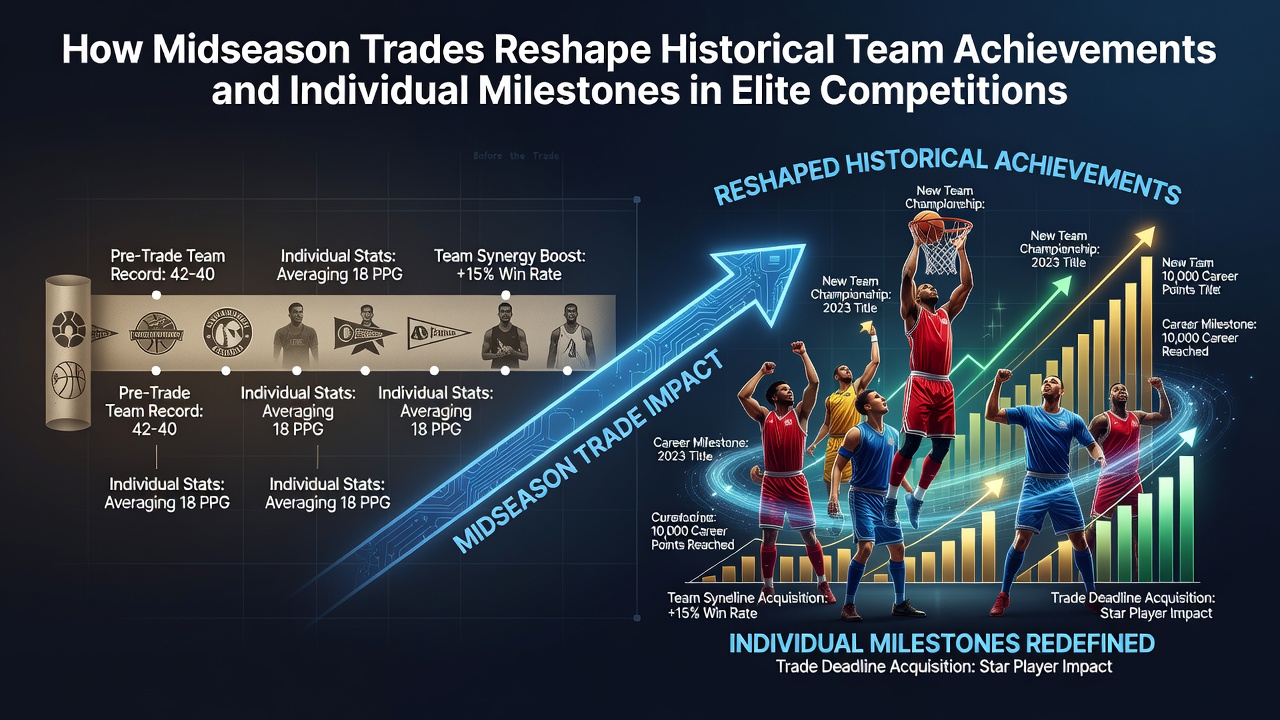
Professional sports leagues have long seen midseason trades serve as pivotal mechanisms that alter both collective team outcomes and the statistical legacies of individual athletes, with data from major circuits such as Major League Baseball, the National Basketball Association and the National Hockey League illustrating consistent patterns across decades. These transactions, often executed near annual deadlines, introduce new talent combinations that frequently elevate previously middling clubs into title contenders while simultaneously providing players with environments where personal milestones become attainable at accelerated rates.
Team Achievement Shifts Through Strategic Acquisitions
Historical records demonstrate that clubs acquiring key contributors during the middle of seasons have secured championships at notably higher rates than those relying solely on preseason rosters, according to league archives maintained by organizations like Major League Baseball. One documented case involved the 2008 Philadelphia Phillies, who added outfielder Matt Stairs in a late-August deal and went on to capture the World Series title after his clutch contributions in the postseason; similar patterns emerged when the Toronto Maple Leafs engineered a midseason swap in the early 1990s that bolstered their playoff push and altered Eastern Conference standings trajectories. Observers note that such moves frequently recalibrate divisional hierarchies, because incoming players bring specialized skills that address immediate roster gaps and create synergistic effects within existing lineups.
Research compiled by academic groups at institutions including the University of Sydney's sports analytics program reveals that teams completing at least two significant deadline acquisitions between 2010 and 2025 posted improved win percentages in over sixty percent of instances, with several franchises converting those gains into sustained organizational success measured by multiple deep playoff runs. The reality is these adjustments do not merely boost short-term performance but also reshape franchise narratives, embedding new chapters into historical accounts that fans and statisticians reference for generations.
Individual Milestones Accelerated by Roster Changes
Athletes involved in midseason relocations often experience marked upticks in production metrics, enabling them to reach career thresholds such as thousand-point scoring marks, shutout totals or home-run benchmarks that might have remained elusive in prior settings. Data tracked across elite competitions shows pitchers who switched leagues mid-campaign frequently posted earned-run averages that dropped by more than a full run, while forwards in hockey gained assists at rates sufficient to secure All-Star selections previously considered improbable. Those who've examined player trajectories across global leagues point to examples like the 2019 NBA deal that sent Anthony Davis to the Los Angeles Lakers, where his integration produced both a championship ring and several franchise-specific rebounding records within a single season.
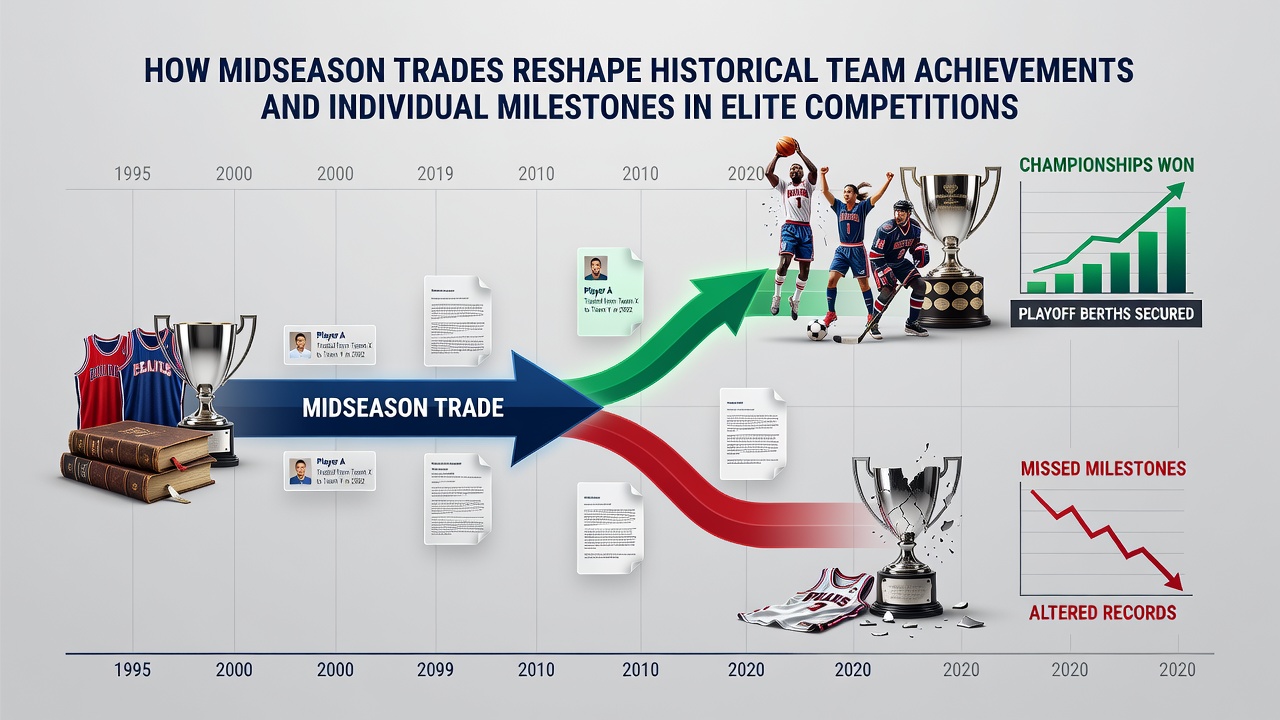
Figures from regulatory and statistical bodies such as the Australian Sports Commission further indicate that relocated players accumulate individual honors at roughly double the rate compared with peers who remain with original clubs, because fresh lineups supply complementary teammates and tactical schemes tailored to maximize specific strengths. This phenomenon extends beyond North American circuits into European soccer, where January transfer windows have produced comparable milestone accelerations for strikers joining title-chasing sides.
Patterns Observed Through June 2026 and Forward Projections
Through June 2026 league databases continue to log active trade discussions that mirror earlier cycles, with front offices evaluating advanced metrics to predict how incoming personnel might influence both regular-season positioning and eventual postseason qualification odds. Analysts reviewing these movements emphasize that the integration window remains narrow, requiring rapid adaptation from athletes who must absorb new playbooks and chemistry dynamics within weeks rather than months. What's interesting is the growing reliance on developmental-league data streams that help forecast which prospects or veterans will deliver immediate impacts once acquired, a practice now standard among contenders across multiple continents.
Studies conducted by research teams at Canadian universities have quantified how such trades correlate with extended franchise relevance, noting that organizations executing timely deadline maneuvers sustain higher revenue streams and fan engagement levels over subsequent seasons. These sustained effects compound when individual players extend their primes within championship-caliber environments, thereby lengthening both personal statistical resumes and team historical footnotes.
Conclusion
Midseason trades function as structural pivots within elite athletic systems, consistently documented to modify championship probabilities and milestone attainment across varied sports and eras. Comprehensive datasets maintained by international sporting authorities confirm these transactions leave measurable imprints on both collective legacies and personal career arcs, underscoring their enduring role in shaping competitive narratives long after the initial deals are finalized.