Championship Legacies and Their Role in Reshaping Global League Tables Across Decades
Devon Müller · Aug 26, 2026
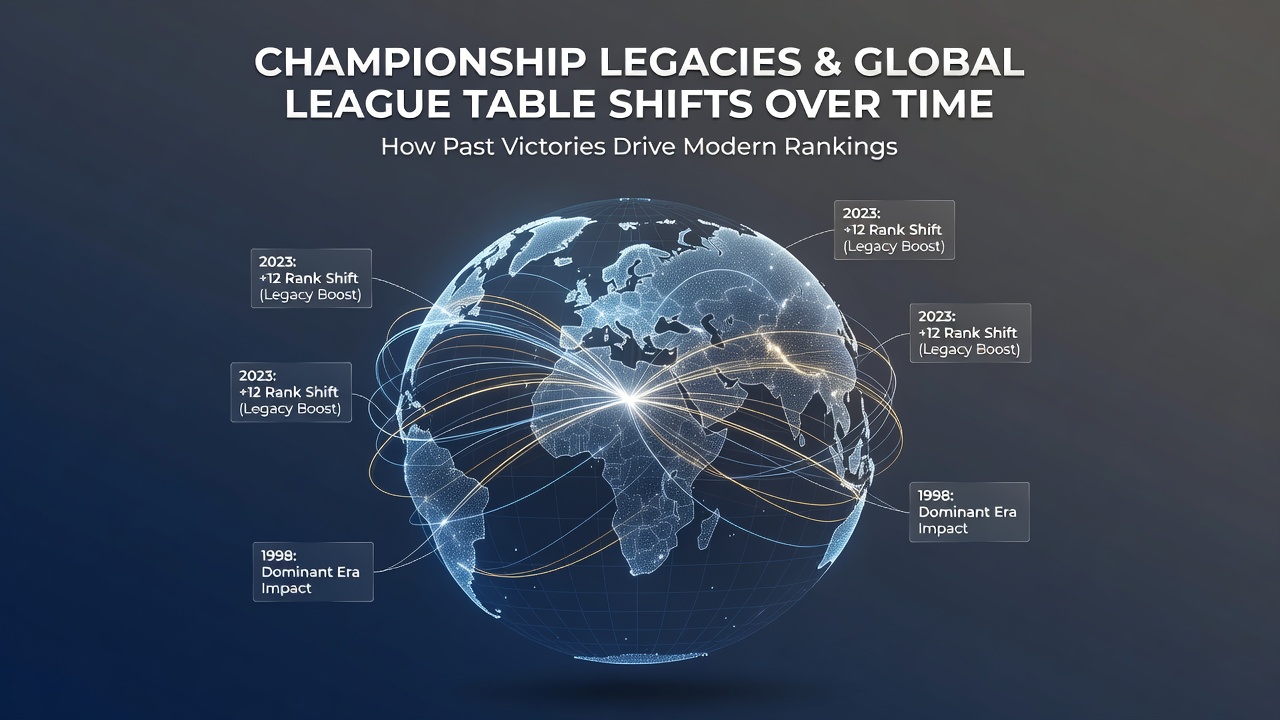
Championship Legacies and Their Role in Reshaping Global League Tables Across Decades
Championship wins create measurable effects on league positions that extend well beyond the immediate season, as organizations gain access to enhanced funding, retain key personnel, and build institutional knowledge that compounds over time. Data from major competitions shows repeated title holders climbing higher in subsequent rankings, while one-time winners sometimes see stabilization rather than continued ascent. Researchers tracking these patterns across soccer, basketball, and rugby note that legacy effects appear strongest in leagues with revenue-sharing models tied directly to performance metrics.
Mechanisms Behind Sustained Table Movements
Financial inflows from sponsorships and broadcast deals rise sharply after a championship, allowing clubs to invest in scouting networks and youth academies that feed future rosters. This cycle strengthens mid-table teams into consistent contenders, whereas squads without such resources often plateau despite occasional strong campaigns. Studies conducted by the Australian Institute of Sport highlight how these resource advantages translate into measurable ranking gains within three to five years after the initial success.
Player retention plays an equally critical part, since champions attract free agents and draft prospects who view the organization as a proven environment for further achievement. Coaching staffs also benefit from extended contracts and larger support teams, which reduces turnover and preserves tactical continuity across seasons. Observers tracking European basketball leagues have documented cases where back-to-back title winners maintained top-five finishes for nearly a decade afterward because of these interlocking advantages.
Regional Differences in Legacy Impact
North American leagues exhibit different patterns from their European and Asian counterparts because of salary caps and draft systems that redistribute talent more evenly. Yet even under these constraints, championship organizations frequently post improved regular-season records in the following campaigns due to heightened ticket sales and merchandise revenue that funds better training facilities. In contrast, open European soccer structures allow greater variance, where legacy clubs can pull away from the pack more decisively once they secure multiple domestic or continental honors.
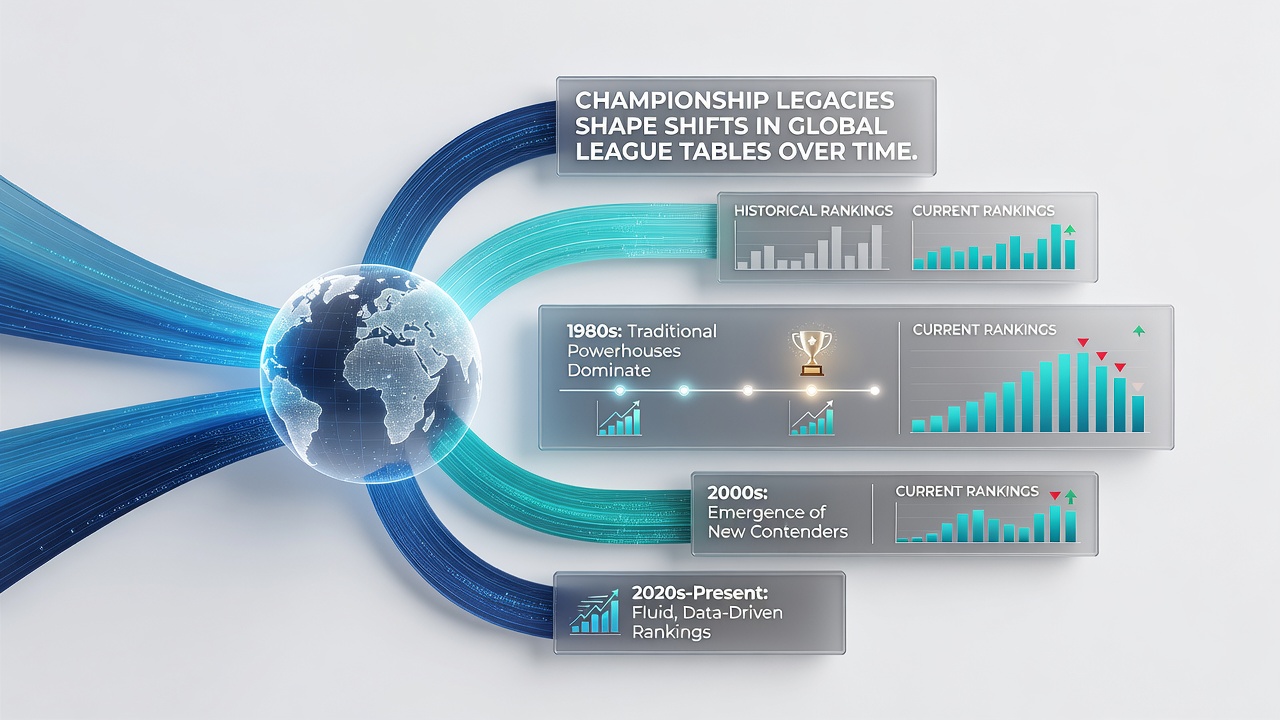
August 2026 data from several international federations indicates that clubs with three or more titles in the prior ten years occupy a disproportionate share of the upper quartile in current standings across multiple continents. This distribution holds in both professional and semi-professional divisions, suggesting the pattern operates independently of absolute budget size in many instances.
Case Examples Across Sports
One rugby union side in the southern hemisphere secured consecutive titles in the mid-2010s and subsequently appeared in the top three of its domestic table for eight straight seasons, a stretch attributed to both financial stability and the development of a recognizable playing identity that younger athletes sought to join. Similar trajectories appear in North American hockey, where organizations that won multiple Stanley Cups during the same period maintained higher average points totals in regular-season play for years afterward.
Researchers examining these trends emphasize that legacy effects interact with external variables such as ownership changes or major rule modifications, yet the core correlation between prior titles and future positioning remains statistically significant across datasets spanning more than twenty years. Reports from the Olympic Studies Centre provide additional context on how multi-year success influences national federation funding allocations that in turn affect club-level competitiveness.
Long-Term Organizational Consequences
Institutions that convert championship momentum into infrastructure upgrades often sustain elevated positions longer than those that allocate new revenue primarily to short-term player acquisitions. Data compiled through 2026 shows that clubs investing in academy facilities after major wins recorded fewer relegations and more frequent playoff appearances compared with peers that focused spending elsewhere. These outcomes reinforce the view that championship legacies function as catalysts for structural rather than merely cyclical improvements.
Conclusion
Championship legacies influence global league tables through interconnected financial, personnel, and cultural channels that accumulate over multiple seasons. Patterns observed in diverse sports and regions confirm that early success frequently produces lasting shifts in competitive hierarchies, provided organizations channel resources into durable systems rather than isolated reinforcements. Ongoing monitoring by international federations continues to refine understanding of these dynamics as new title cycles unfold.