Breakout Years That Shifted the Trajectory of Sports Team Dynasties
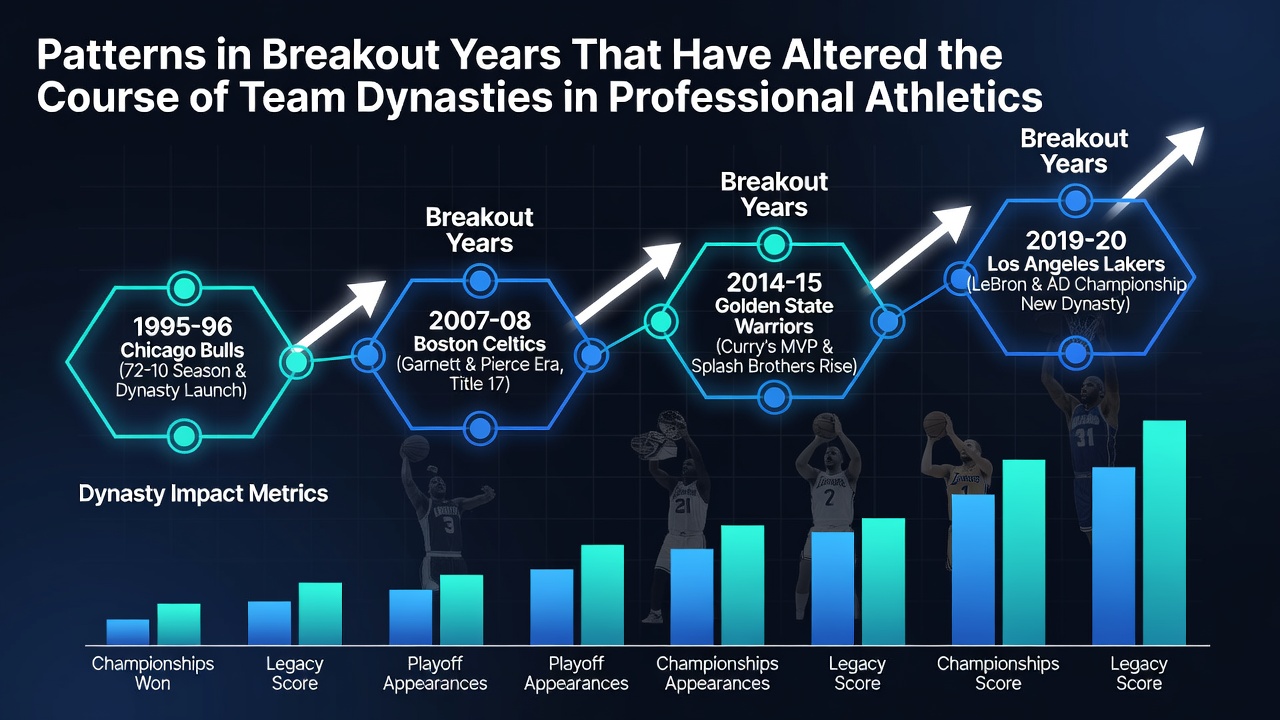
Breakout years in professional athletics often mark decisive shifts in how teams build sustained success, with certain seasons producing statistical surges that extend far beyond a single campaign. Data from major leagues shows these periods frequently coincide with roster adjustments, tactical innovations, and individual performances that compound over time to create or dismantle dynastic runs.
Patterns Observed in North American Leagues
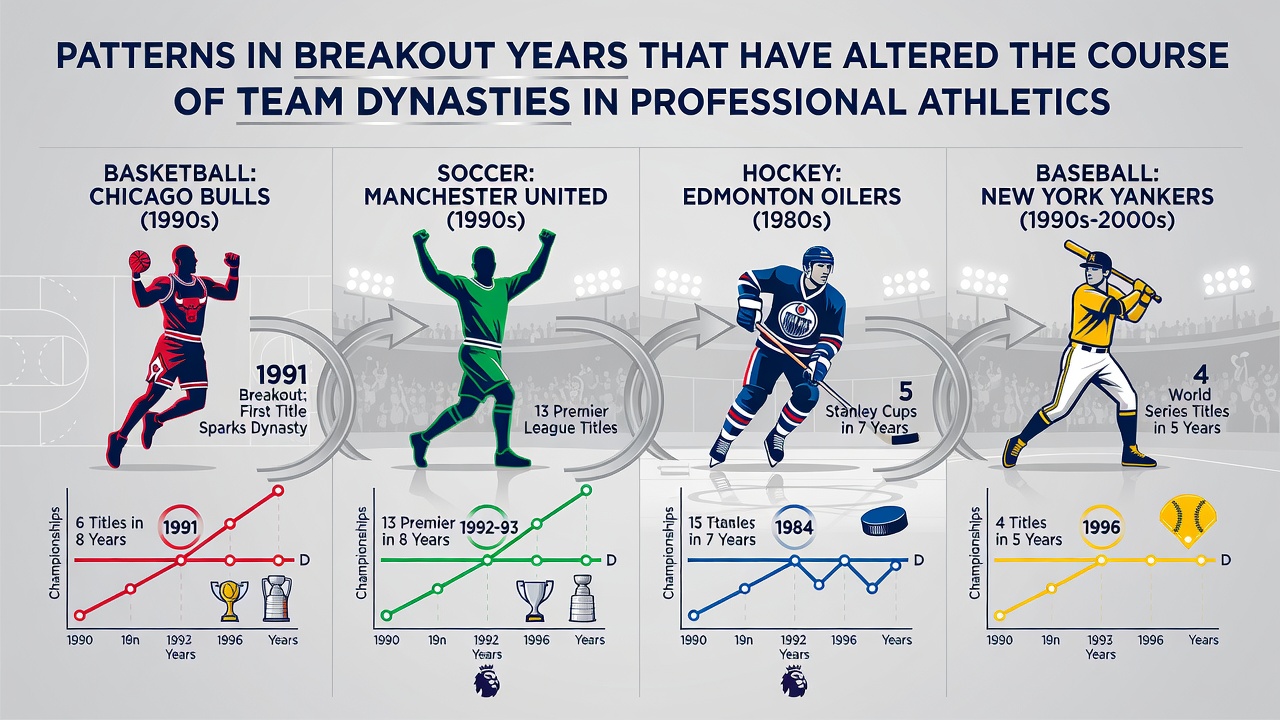
Baseball provides clear examples where a single standout season altered franchise directions, such as when the 1990s Atlanta Braves integrated young pitching talent that produced multiple division titles through the early 2000s. Researchers tracking win totals and ERA metrics note that breakout pitching staffs in that era correlated with extended playoff appearances, while similar patterns appeared in the 2010s with teams like the Chicago Cubs, whose core group emerged in 2015 and led to a World Series title the following year. Observers note how these years established benchmarks for player development that other organizations later replicated across the sport.
Basketball dynasties have followed comparable trajectories, with the Golden State Warriors' 2014-15 season illustrating how improved three-point efficiency and defensive ratings transformed a middling roster into a multi-year contender. League records indicate that teams experiencing such statistical jumps in shooting and rebounding percentages tend to maintain higher standings positions for subsequent seasons, creating ripple effects on salary structures and draft strategies throughout the NBA.
Global Soccer and Rugby Examples
European soccer leagues reveal parallel developments, where breakout campaigns by clubs like Leicester City in 2015-16 produced unexpected title wins that influenced recruitment models across the Premier League. Figures from domestic competitions show how elevated goal differentials and clean sheet rates in those seasons often precede multi-year qualification for continental tournaments, strengthening financial positions and squad depth. In rugby, Australian and New Zealand franchises have documented cases where forward packs posting career-high tackle success rates in one season paved the way for repeated Super Rugby finals appearances in the following years.
What's interesting is how these patterns cross borders, with data indicating that developmental thresholds reached in one league frequently predict success when players transfer to another. A study conducted by Canadian researchers at the University of Toronto highlighted connections between early-career metrics in junior circuits and later organizational achievements in professional ranks.
Emerging Trends Through Mid-2020s
As of June 2026, analysts continue to examine how recent breakout performances in international competitions might influence long-term standings. Metrics from the prior two seasons in European basketball and South American soccer suggest that teams achieving sudden improvements in efficiency ratings often sustain those gains through roster continuity rather than repeated acquisitions. This approach has appeared in several organizations that reached conference finals or league playoffs for the first time, setting foundations for extended contention windows.
Those who've studied these cycles point to recurring elements such as accelerated integration of academy graduates, refined defensive schemes, and targeted offensive adjustments that produce outlier seasons. Historical datasets reveal that such years rarely occur in isolation, instead serving as catalysts that reshape competitive hierarchies across entire conferences or divisions for five to eight years afterward.
Conclusion
Patterns in breakout years demonstrate consistent links between singular statistical advances and prolonged dynastic shifts in professional athletics, with evidence drawn from multiple sports confirming their role in redefining team trajectories. Organizations that capitalize on these moments through strategic planning often extend their competitive advantages, while others adjust approaches based on the same data to close gaps in future cycles.